Central Park – The Zeckendorf Project
I can hear David Hockney screaming, “PHOTOGRAPHY IS DEAD!”
The end of one thing opens the door to something new. The social media platforms let everyone be a hero in their own life for the day. The portrait photographer’s eye and opinion was removed as the subject took control of how they showed themselves to the world.
I was once on the set for a shoot with Yoko Ono. With her finances she could afford to bring her own makeup and lighting crew. She created her own image and the photographer’s signature lighting was gone, she had control of how the world would see her.
Failures invites one to alter their original course – to reflect, explore, and experience new and uncharted adventures. In the 90s, I dove into the digital age. At first, I loved the snapping power without cost and the delete button so available. But soon the sophistication of this technology stole the creative mojo and without effort we were all shooting that Hallmark card. That is when I started taking the cameras apart, so that I could own my own image.
By 2014, I returned to the analogue processes, drawn back to their material uncertainty and the alchemical transformation that occurs beyond my control.
Rather than treating the negative as a sacred artifact, I subjected it to chemical bleaching, sometimes to the point of erasure. I cut and chopped my negatives into angles. I even started rolling and reshaping my prints into three-dimensional forms, extending photography into sculptural space and emphasizing its dual existence as image and object in the same sentence.
Even the political air was fogged between Antonio’s film “Blow Up” and Goddard’s film “Sympathy for the Devil.” The modern day leaders twisted our visuals and knowledge into some sort of LSD experience. All that happens around wether we are too conscience or unconscience of it, it influences what comes out of us. When we sit down to create, we have a blank sheet with an unknown objective, with only the knowledge to trust ones self.
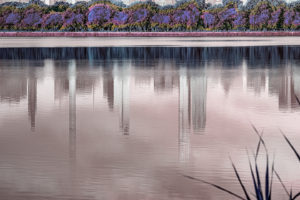
Central Park took to the theme to question our realities as to fact or fiction. Color was gradually destabilized—erased, submerged, and reintroduced at the threshold of recognition—producing images that hover between documentation and invention. The resulting palette resists temporal certainty, inviting viewers to question both season and authenticity.
The Central Park series does not seek to redefine the landscape, but to too gently dislocate it. It proposes photography not as a record of what is seen, but as a catalyst for how seeing itself might shift—reminding us that the medium remains very much alive, but most important as to wonder if what we see is the truth or the manipulation of facts.
The New York Times – A Longtime Artist Reimagines City Landmarks
La Gazzetta Del Mezzogiorno – Mare di Metaponto a Lexington Avenue

The Age of Beauty invites viewers to consider aging as an alchemical act. The flower does not simply wither and vanish. Through transformation, it becomes something richer, more complex, and more evocative than it was in bloom. Just as alchemists sought gold within ordinary matter, this project seeks the hidden beauty that emerges through the passage of time. In both flowers and people, age transforms what appears to be loss into a deeper form of value—one found in character, memory, wisdom, and the elegant abstractions created by life’s unfolding journey.
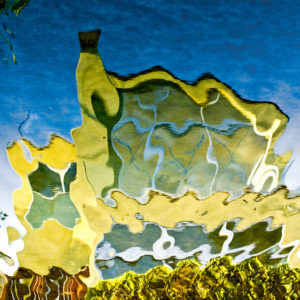
The piece explores how romantic love is often shaped by imagination rather than reality—two people falling in love with projected versions of each other, creating a perfect but unstable illusion that eventually leads to emotional collapse.
This longing is tied to a deeper history of early loss and forced independence, where security replaced emotional surrender. In California, the speaker confronts feelings of exclusion and sadness while looking at idealized homes they feel shut out from.
The emotional turning point comes when ducks disrupt the scene in the Venice Canals, transforming reflection into movement and unexpected beauty. That shift reframes perception: instead of grieving what is missing, the speaker recognizes the power to transform reality into art. This becomes the foundation of the work titled “SECONDS.”
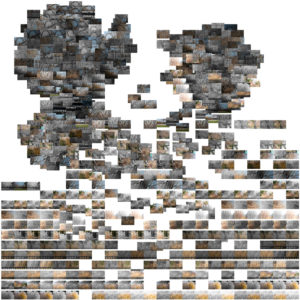
Each night I delegate authorship to a machine that produces a complete visual census of my day. More than one hundred exposures are made, but none are selected, corrected, or elevated. Selection itself is treated as a form of violence against multiplicity. Instead, the system is instructed to compress everything into a single contact sheet—an unedited democracy of seeing.
The photograph is no longer an image but a condition: a field in which equivalence replaces hierarchy. Meaning is not extracted from the frame; it accumulates across repetition until recognition becomes statistical rather than symbolic.
In this logic, the “artist” is not the one who chooses, but the one who sets the rules of non-choosing. The camera becomes an involuntary witness, and the computer becomes a nightly editor that refuses interpretation. What emerges is not a picture of the world, but a trace of attention distributed across time—an index of seeing without judgment.
Like a crowd that cannot be reduced to a single face, the work resists portraiture. Identity dissolves into volume. The contact sheet is not a summary; it is a refusal of summary. It does not resolve experience—it preserves its simultaneity.
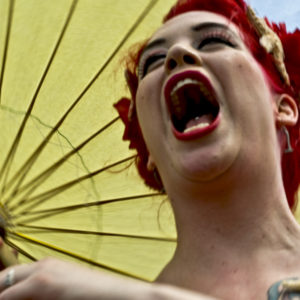
The Coney Island Mermaid Parade
I explore the unexpected to discover what emerges. Pairing the spectacle of the Coney Island Mermaid Parade with an architectural tool like the Nikon PC-E Micro-NIKKOR 85mm f/2.8D Tilt-Shift Lens, I disrupt its intended purpose. Instead of correcting reality, I distort it—transforming portraits into something exaggerated, unstable, and louder than life.
Cynthia Karalla is the hardest working artist I know. With her great determination and tenacious energy, she is an irrefutable force of nature!”
Andres Serrano
KARALLA’s – FAT LANDS by Anthony Haden-Guest
Edited by Eleanor Whitney
In her newest project Fat Lands New York and Italy-based artist Cynthia Karalla explores the beauty and repulsion of physical, spiritual and material excess. .
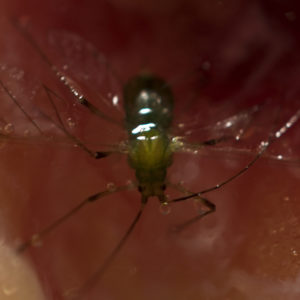
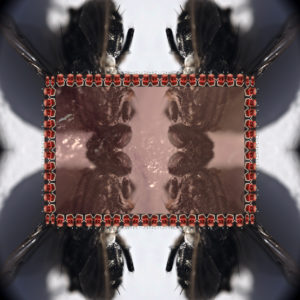
Karalla created Part I of the piece, entitled Straight Up Fat, by placing a slab of human fat under her homemade microscope camera. Though both psychical and metaphorical fat is in abundance in American culture, as she set out to create the project Karalla was afraid that actual fat might be difficult to obtain. Working with a doctor, and with the consent of one of his patients, she was able to obtain half a pound of fat and a slab of skin that were removed from the belly area during an operation. The fat itself was pale pink, while the skin was bright white. “How ironic,” Karalla thought, reflecting on the fat she had procured, that while only the rich can afford to delete fat though surgery, by creating a saleable work of art she could sell it back to them. To shoot the fat Karalla set up the microscope camera in her small, Manhattan backyard. As she waited for the sun in order to have complete control of the light she began to play with the discarded objects that had inadvertently collected in the yard. She built a setting to play make-believe and found a toy soldier that looked like Columbus. “Land! I’ve discovered the Fat!,” she said to herself. When the sun fell behind the skyscrapers and she could have her way with the light Karalla focused her camera on the slab of human fat in front of her. Just as she started to click away a tiny mosquito that was too small to see with the naked eye flew into the fat. A serendipitous artistic moment had struck. She filmed the process of the bug sucking off the fat, an act of over consumption which soon ended its short life.
Cynthia Karalla’s Fat Lands is a three-part conceptual project that investigates excess, consumption, value, and mortality through visceral and symbolic materials.
In Part I, Straight Up Fat, Karalla uses a microscope camera to film a slab of human fat and skin obtained from a consenting surgical patient. Set in a Manhattan backyard, the work contrasts clinical detachment with raw bodily material. A chance encounter with a mosquito—attracted to and ultimately killed by the fat—becomes a central metaphor for consumption as both desire and self-destruction. The scene merges scientific observation, urban environment, and accidental life-death drama.
In Part II, Specially Designed Fat, she shifts from physical matter to economic abstraction, examining absurd luxury commodities priced at extreme values, such as million-dollar consumer goods and a $30 million bikini. These objects become symbols of inflated worth and cultural obsession with status. Karalla links this excess to the mosquito’s fatal consumption, questioning how human life is spent chasing ephemeral material prestige and suggesting that consumption itself is a form of slow self-erasure.
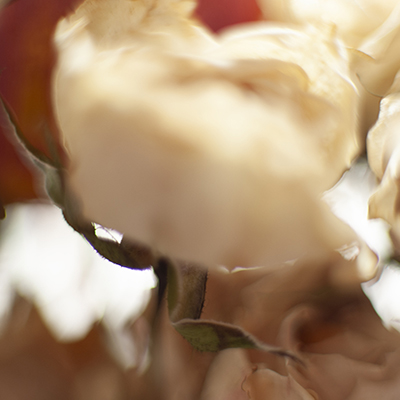
In Part III, After Death Options, Karalla turns toward resolution and fragility, focusing on dead flowers in her apartment as emblems of life’s transience. Flowers function as emotional artifacts—objects of beauty, memory, and loss. This final section reframes the project from bodily excess and economic critique toward quiet reflection on mortality and meaning, offering a softened, poetic counterpoint to the earlier visceral intensity.
Overall, Fat Lands moves from flesh to commodity to decay, weaving together irony, humor, and discomfort to question how value is assigned—to bodies, objects, and life itself.
The Bottom Line;
In Specially Designed Fat, Karalla exposes the absurd theater of wealth, where value detaches from meaning and clings only to price.
“What—and who—decides something is worth millions?”
A $1 million cake, $1 million tire rims, a $1.6 million Birkin bag, a $1.8 million dog collar, a $30 million bikini—objects so inflated they collapse into parody. “It was a contest,” she notes, “to make the most expensive piece of garbage.”
Her response: declare her own work worth millions—in unlimited edition. Value, revealed as fiction.
But beneath the satire is a darker metaphor: the mosquito trapped in fat, feeding until it dies within it.
So too with us—brief lives spent consuming what will outlast us.
The objects remain. The desire remains.
You don’t just consume them.
You disappear inside them.