
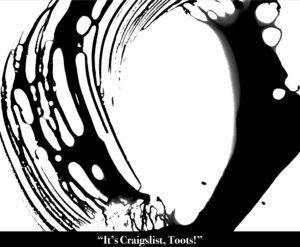
"It's Craigslist, Toots!"
It’s Craigslist, Toots! begins with a small act of deception—buying already exposed darkroom paper from a Craigslist seller whose dismissive reply, “It’s Craigslist, Toots!” becomes both provocation and catalyst. What starts as a robbery transforms into a philosophy. The book explores how disappointments, betrayals, accidents, and life’s apparent negatives can be reimagined as unexpected gifts—moments that force new ways of seeing. Through this inversion, adversity becomes material for transformation. At its core, the book is about changing thought patterns: recognizing that every setback contains a hidden opening, and that by shifting perception from loss to possibility, we enter unknown paths, creative adventure, and a richer understanding of how the universe often speaks through disruption.
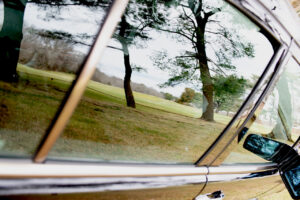
Selling My Boyfriend
Selling My Boyfriend (The Love Story) is a playful, seductive, and deeply personal conceptual narrative that begins as a romance and slowly reveals itself as a love letter to a 1999 Mercedes-Benz E430 (W210). Framed as the story of a perfect boyfriend—reliable, handsome, protective, and enduring—the work blurs devotion, satire, and performance as the “boyfriend” becomes both lover and machine. What begins as a confession of love at first sight transforms into a meditation on commitment, restoration, aging, and the emotional life we project onto objects.
Part romance, part artist statement, part conceptual gesture, the piece explores love through maintenance and obsession: rebuilding, upgrading, testing endurance, and refusing disposability. The high-mileage car becomes a metaphor for survival, spirit, and lasting beauty outside conventional notions of value. With humor and myth-making, the work elevates a mechanically overlooked automobile into an icon, while challenging ideas of luxury, attachment, and worth.
The climax is the ultimate conceptual twist: the “boyfriend” is offered for sale at two dollars per mile—over $628,000—transforming an old car into living artwork, relational sculpture, and legend. Included in the sale are large photographic prints and entry into the story itself, making ownership less a purchase than participation in an artwork about love, mileage, and immortality.
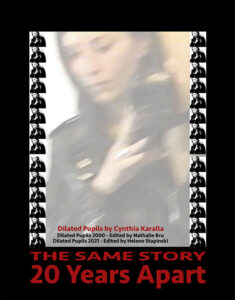
20 Years Apart
INTRO: By Helene Stapinski
Memory and perspective are slippery things. Artist Cynthia Karalla recently recounted a dramatic childhood memory, only to discover accidentally that she had written about the same event 20 years earlier, a piece of writing she’d forgotten even existed. With the passing of time, facts change. The ground becomes softer, the lessons become clearer, the tale more entertaining parable than preachy horror story. Karalla, a successful art photographer, is no longer the bruised and battered little girl with dilated pupils, running for her life, but the victorious survivor with new eyes, pupils back to normal size. Through art, Karalla has used those eyes to photograph the world around her, and make a new life, one that is still exciting and adventurous, but in a good way, a happy life filled with joy and possibility.
Comparing her two stories, we learn a new lesson: that we reinvent our awful past to keep it in line with the more pleasant present. As we age, we become better storytellers, smoothing the edges of anger, condensing or leaving out the nastiest bits, air-brushing the painful details, eliminating whole chapters and anecdotes altogether. What a difference a score makes.
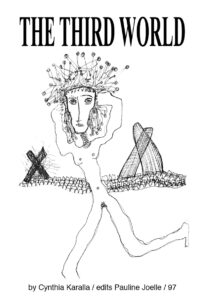
The Third World
FINNOT REALLY is an experimental, poetic memoir that blends autobiography, surrealism, social critique, and love mythology into a nonlinear journey of self-creation. Beginning with a childhood marked by religious tension, family pain, and early writing as survival, the book moves into a kaleidoscopic sequence of poems and prose meditations where rebellion, desire, gender fluidity, art, and spiritual freedom collide.
At its heart, the book is about resistance to conformity—social, sexual, religious, and artistic. The speaker rejects rigid systems (“Blasphemy”), celebrates outsider identity and bohemian freedom (“Moon Balm,” “The Third World”), and treats love as both ecstatic and absurd (“Monkey Wrench Love,” “True Glue,” “Umbra”). Relationships appear as mythic theater—part punk romance, part philosophical comedy, part emotional battlefield.
Recurring throughout is a devotion to wildness and self-sovereignty: refusing social blocs, refusing prescribed roles, refusing polite civilization in favor of instinct, art, and imagination. Gender and identity are fluid and playful (“Eclipse”), desire is often comic and sacred at once (“Master Prince Abated,” “Bad Girl”), and language itself becomes a performance—collage-like, musical, disruptive.
Figures like Zelda, Odile, Lady in Waiting, and Maldoror become muses or archetypes in a personal mythology populated by rebels, lovers, tricksters, and wounded visionaries. Humor and satire undercut seriousness, while grief, illness (“Flowers”), and mortality deepen the work’s emotional core.
The final “Concerto Epilogue” gathers the book’s images—roads, war, love monkeys, muses, gods, dirt, bicycles—into a fractured self-portrait that suggests survival through art.
In essence:
This is a poetic manifesto about turning trauma into invention, outsiderhood into freedom, and language into an act of liberation. It reads like a punk-surreal spiritual autobiography, where memoir, prose poem, and philosophical rebellion become one.
Comprachicoes in the Raw
Comprachicoes in the Raw reads like an experimental memoir-manifesto written from exile—part prose poem, part political critique, part spiritual rebellion. Looking back at America from Crete, the book explores how society “mutilates” the human spirit—especially children, artists, women, workers, and outsiders—shaping them into spectacles, commodities, and obedient subjects, echoing the meaning of “comprachico.”
Across dreamlike episodes, allegories, letters, and lyrical fragments, the book moves between the personal and the prophetic:
- In surreal, symbolic narratives like Spaces Dressed in White and The Wild Spirit, innocence, creativity, and freedom struggle against control, possession, and domination. The untamed horse, the golden child, and the white spaces become recurring images of the soul under threat.
- In social and political meditations such as The American Dream, Cattle Calling, Pass the Buck, and America the Beautiful, America is portrayed as a system of illusion, exploitation, racial violence, media conditioning, and economic imprisonment.
- In personal reflections like More Than a Death and Precious Jewels, grief, vulnerability, sexuality, and survival are rendered with tenderness, exposing the dignity of people cast aside by society.
- In philosophical fragments—Structures, Rebel at Large, The Awakening, and 7 Steps to Gold—the book calls for spiritual awakening, rebellion against conditioning, and a return to authentic inner freedom. Art, love, intuition, and “virtue as rebellion” become acts of resistance.
- Through pieces like Dear Student Loan People and Letter to a Friend, satire and direct address sharpen the critique of institutions—education, government, capitalism—while insisting true currency lies in imagination, conscience, and the soul.
Overall, the book is a raw poetic indictment of social control and a mystical search for liberation. It asks how one preserves wildness, compassion, and creative truth in a world bent on taming them. Its recurring message is that despite systems of manipulation, the rebel spirit, love, and inner freedom remain unconquered.
Dime Bag
“Dime Bag”
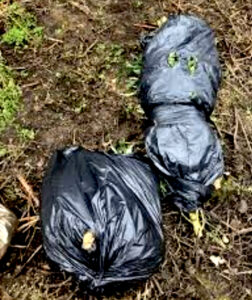
“Dime Bag” is a humorous coming-of-age story about luck, rebellion, and youthful improvisation. After losing a treasured dime bag of marijuana, a teenager and her friend Charlie—driving illegally in his father’s Mercedes—set off to replace it through Charlie’s eccentric uncle. Instead, they stumble upon garbage bags filled with marijuana near a river and each take one home, suddenly going from having nothing to having far too much.
The narrator imagines the haul as the perfect belated birthday gift for her mother, only to be firmly ordered to get it out of the house immediately. Desperate to solve the problem, she brings the bag to the local White Panther activists, tries to give it away for free, but eventually accepts $75 after bargaining the price down from $600. What began as the tragedy of a lost dime bag turns into an absurd adventure involving teenage risk-taking, counterculture characters, and an unexpected profit. Years later, the narrator learns her mother had been telling the story for years as a favorite family dinner tale, transforming what once felt like trouble into a cherished, comic family legend.

Elmers Glue
“I Am Going to Know You for the Rest of My Life”
Set amid the chaotic ego and theater of a punk rock scene, this story begins with the constant mention of Nathalie, a mysterious French woman spoken of almost mythically before the narrator finally meets her. What starts as a tense car ride with a mercurial punk boyfriend, bassist Sto, and the striking Nathalie turns into an accidental road-trip drama on the way to buy a vintage Rambler.
During the trip, Sto and Nathalie dramatically break up—only to announce minutes later that they are getting married. Their emotional whiplash mirrors the absurdity and performance of the punk world surrounding them. As the ride back devolves into macho posturing and pretentious punk banter, the narrator reaches a breaking point and, in a comic act of rebellion, pours Elmer’s Glue down her boyfriend’s pants.
The outrageous gesture becomes a moment of liberation and the spark of a lifelong friendship. Nathalie’s laughter and declaration—“I am going to know you for the rest of my life”—marks the true love story of the piece: not romance, but the birth of female friendship forged through humor, defiance, and walking away from toxic men together.