The Mermaid Parade – Coney Island

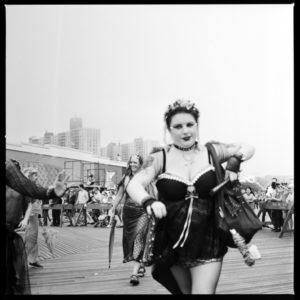
Each early summer, the shoreline transforms as mermaids rise from the surf and, alongside fairies and witches, reveal themselves in their truest forms. Thousands gather for this annual ritual of spectacle, freedom, and self-invention. In 2017, Karalla photographed this charged convergence, capturing not only its theatrical beauty but the participatory spirit at its core—a living pageant where myth, identity, and communal release blur into one ecstatic tide.


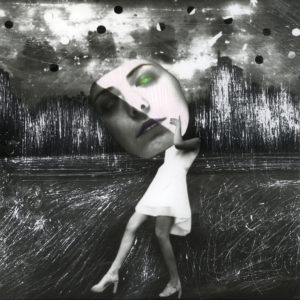
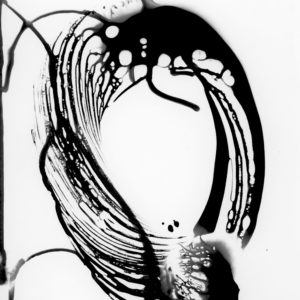
Bleached, Under the Kitchen Sink is a meditation on transformation through photographic destruction and rediscovery. Beginning with discarded or “hopeless” negatives, the work embraces bleaching, bending, cutting, and scraping as acts of collecting life rather than ruining it. Distance and time—letting the work sit for months before returning to edit—become part of the creative method, allowing unexpected beauty to emerge beyond premeditated ideas. What began as passion evolves into an obsessive artistic practice, where ruin, chance, and revision become the source of vision.


Cracked Ribs (2016) emerged from injury as an act of transformation. After an accident left Karalla with cracked ribs, she turned recovery into process, using boredom itself as material. Through breathing exercises performed before an open camera shutter, she recorded duration, pain, and persistence as image. Some exposures dissolved during the hour-long recordings, but those that survived became traces of endurance—works suggesting that even fracture can generate form. In Karalla’s telling, the surviving images made “cracking the ribs” worth it, turning accident into artistic genesis.

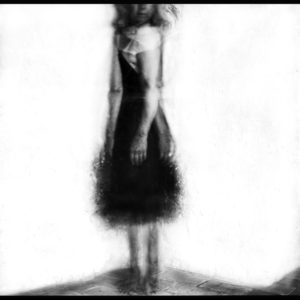
The Evolution of Alice 2017 – In a final darkroom session marked by gloom, the artist’s mood imprinted itself onto a series of dark, nearly ruined prints made from a contact negative montage from three cameras over three years. When the over-darkened architectural background seemed to render the work worthless, destruction became a method of rescue: using grade #80 sandpaper, the artist scraped into the photo paper’s fibers to excavate light from darkness. What began as a failed print evolved into an act of recovery, where abrasion became both aesthetic process and metaphor for hope emerging through damage.

It’s Craigslist, Toots! begins with a small act of deception—a Craigslist robbery over ruined darkroom paper—transformed into a philosophical spark when the seller dismisses the incident with the absurdly unforgettable phrase, “It’s Craigslist, Toots!” What begins as irritation becomes artistic fuel. The book turns mishap into myth, treating accidents, betrayals, and everyday absurdities as gifts from the universe. Through the symbol of the ouroboros—the serpent consuming its own tail—the work embraces cycles of destruction becoming creation, negativity becoming material, and loss folding back into revelation. What was once a scam becomes a best-selling title, a mantra, and an artwork in itself.


I Ching

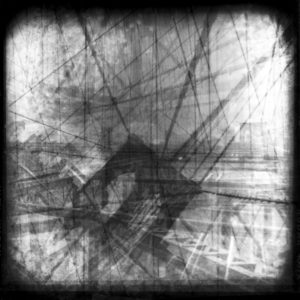
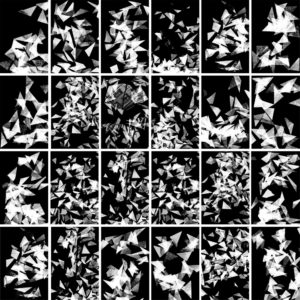
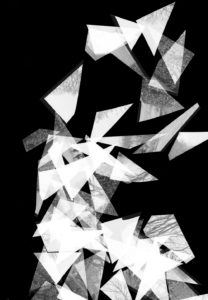
Karalla positions photography as an event governed by chance rather than intention. In dialogue with the aleatory strategies of John Cage and the divinatory logic of the I Ching, she rejects the authority of the decisive moment in favor of uncontrolled convergence. Large-format negatives are cut, fragmented into triangular units, and released onto the scanner without hierarchy or predetermined composition. The resulting image is not composed but occurred. Like a complex billiard shot, the outcome is the residue of forces, angles, and collisions—where difficulty, improbability, and rule-breaking generate meaning. The photograph is no longer a capture, but a consequence.
I Ching Details


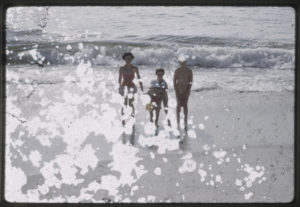
The Juggernaut of Time explores photography not as preservation, but as a site of entropy, where memory, history, and material decay converge. Using deteriorated Kodachrome slides altered by moisture, corrosion, and time, the work transforms the family archive into an archaeological field of ruin. Damaged images become earthworks of memory, revealing time as an active force that erodes, inscribes, and reshapes meaning. Rather than resisting disappearance, the work embraces decay as generative—where corruption becomes authorship and ruin produces vision. Drawing on ideas of entropy, the unstable archive, and history as wreckage, the project proposes photography after permanence: not as a record securing memory, but as a witness to time’s undoing.

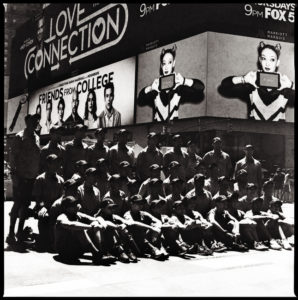
High Noon - Times Square

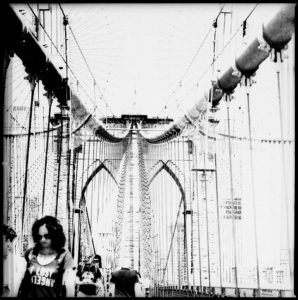
High Noon - Brooklyn Bridge


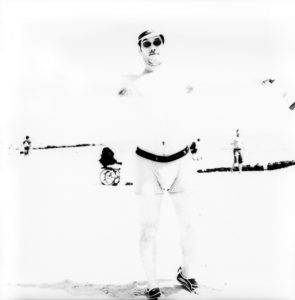
High Noon - Coney Island

High Noon - Times Square - Brooklyn Bridge - Coney Island

After bleaching my film negatives, I wanted to move beyond the darkroom and let light itself perform the act of transformation. In High Noon, made in Times Square, Brooklyn Bridge, and Coney Island, I surrendered the image to the violence of the noon sun. I used light not to reveal, but to erase. The sun became a bleaching agent, burning through description, dissolving surface, reducing the visible world to its trembling essence.

I am interested in the moment when an image begins to vanish—when representation breaks down and something more elemental appears. Under the merciless vertical light of midday, people become apparitions, structures become glyphs, horizons become pure vibration. What survives is not documentation, but residue; not place, but memory scorched into form.

High Noon is an act of subtraction. A refusal of photographic clarity. A search for what remains after light has stripped the world bare. These images are made at the edge of disappearance, where heat, time, and exposure transform the ordinary into something haunted, radiant, and sublime. Photography here is not about capturing the world, but letting it burn itself into vision.